

Property Developers Push for 99-Year Leases in Thailand

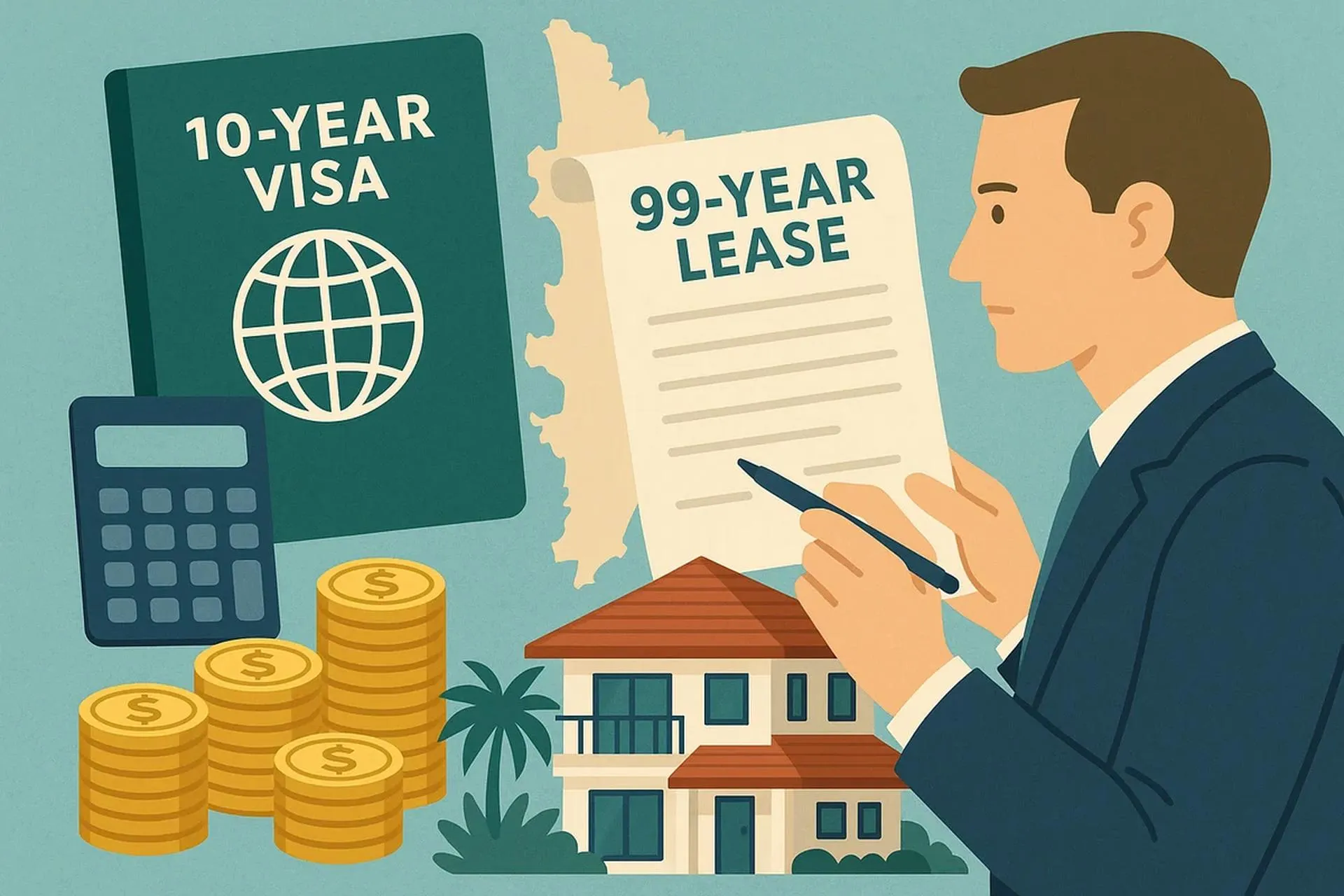
Developers across Thailand are pressing for legislative reform to extend foreign leasehold rights from 30 years to 99 years, arguing that the change would make the property market more attractive globally, draw greater foreign investment, and stimulate economic growth amid the country’s economic slowdown.
Their call has reignited the ongoing discussion on how Thailand can remain competitive in Southeast Asia’s constantly evolving real estate market.
Understanding Thailand’s Current Property Leasing Framework
Under Thai law, foreign individuals cannot own land outright. However, they can still purchase freehold condominiums in Thailand or enter into a leasehold agreement for up to 30 years, the latter of which also covers homes, villas, and other landed properties. These leases can be renewed for a maximum of 90 years. However, this requires consent from the landlord and corresponding clauses in the lease contract; the buyer also needs to pay the lease registration fee with each extension.
While the leasehold is an established structure for long-term possession of real estate assets, the seeming complexity of the above has deterred some buyers. Compared to Thailand, other countries in the region, such as Malaysia and Singapore, already offer lease terms of up to 99 years, providing investors with greater security and predictability while making those markets more competitive in attracting long-term property investment.

Why The Push for 99-Year Leases Has Intensified
The motivation behind the renewed calls for longer leasehold terms stems, in a lot of ways, from Bangkok-based developers entering resort markets, which are dominated by foreign buyers in a way the capital city is not. Longer leaseholds could offer a solution that allows foreigners to purchase landed properties and provide alternative ownership solutions for condominiums (where currently not over 49% of the sellable area can be sold to foreign nationals).
As such, many believe that extending lease terms beyond the current 30-year limit could help draw foreign buyers to Thailand while strengthening the sector’s global appeal.
The Potential Impact of the 99-Year Lease Reform
If implemented, the reform could help create a more stable investment environment in Thailand, supporting long-term financial planning and reducing legal uncertainty.
Greater predictability would appeal not only to retirees seeking lasting security but also to developers and investors in sectors such as real estate, infrastructure, renewable energy, and hospitality, who would gain the confidence to pursue multi-decade projects. Longer leases would also allow for more certainty in planning large-scale developments and encourage new project models that support sustainable growth over time.
In turn, a more secure market could attract highly skilled professionals and entrepreneurs, driving innovation, productivity, and economic growth across Thailand’s targeted industries. Altogether, these factors could make Thailand an even more attractive destination for both investors and residents, while preserving its strong appeal in affordability and quality of life.

The Future of Thailand’s Property Market
While the idea of extending leasehold rights to 99 years is not new, the renewed attention reflects a property sector adapting to economic pressure and shifting investor expectations. Despite skepticism from policymakers and critics who caution against “selling the nation,” developers continue to advocate for reform as a way to attract sustained foreign interest and strengthen Thailand’s position in the regional property market.
Whether or not legislative change follows, the discussion underscores how the pursuit of long-term stability remains central to shaping Thailand’s real estate future.
Please complete the form. We will get back to you as quickly as possible. Alternatively if you want to visit us please call to arrange an appointment.